Chocolate market trends for 2026
Every industry has its turning points, moments when habits evolve, expectations shift and brands must rethink how they connect with people. But few categories make these shifts feel as personal as chocolate.
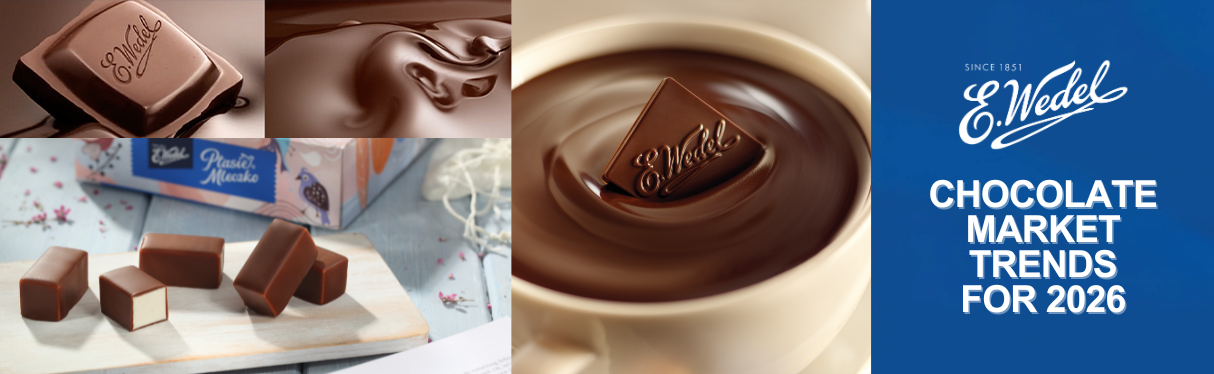
Chocolate is not just a product; it is a ritual, a comfort, a memory. It accompanies birthdays, break-ups, office deadlines, celebrations and quiet evenings on the couch.
As we look toward 2026, the global chocolate market is entering one of its most fascinating transitions yet. Pressures on the cocoa supply, rising costs, new health expectations and changing retail behaviour are reshaping what people choose and why. Yet amid all this change, one thing remains constant: consumers still crave chocolate’s ability to deliver joy in a single bite.
This article weaves together insights from Euromonitor, Mintel, Facts & Factors, and global trade reports, offering a storytelling perspective on where chocolate is heading and how different parts of the world are shaping its future.
A market at a crossroads: growth wrapped in uncertainty
 Imagine walking into a grocery store in late 2026. The chocolate aisle looks familiar. It is rich in colours, shiny wrappers, seasonal displays, but something has changed. Prices are a bit higher, packs slightly smaller, and many products display words like traceable, single-origin, reduced sugar, plant-based, or premium crafted.
This scene is not accidental. It’s the result of several years of profound disruption:
- – Weather shocks and disease in West Africa have tightened cocoa supply.
- – Global inflation pushed brands to raise prices or shrink portions.
- – Consumers became more selective, more informed and more vocal.
Yet despite all this, the category is still growing, not because people eat more, but because they are choosing better, smaller, more meaningful chocolate moments.
2026 is shaping up to be the year of “intentional indulgence”.
Consumers in 2026: choosing chocolate with purpose
The rise of the “small luxury”
In Europe and North America, people have learned to treat chocolate like a little reward at the end of a long day. After years of economic pressure, the idea of “I deserve this moment” has become a quiet, everyday mantra.
Consumers aren’t grabbing the biggest bar on the shelf anymore. They reach instead for:
- Something premium,
- Something crafted,
- Something with a story.
A single-origin 70% cocoa square after dinner. A praline with pistachio cream during a short work break. A beautifully wrapped box gifted “just because.”
The market has shifted from quantity to quality, and this trend will only strengthen in 2026.
Wellness meets indulgence
But indulgence is no longer guilt-free. The wellness mindset is now deeply embedded across age groups. People expect chocolate to deliver pleasure and feel better than the sweets of the past.
They look for:
- Less sugar or naturally sweetened options
- High-cocoa dark chocolate
- Clean labels with short ingredient lists
- Functional chocolate with protein, fibre or adaptogens
Parents, in particular, are becoming more conscious: buying portion-controlled treats, choosing products with fewer additives, seeking chocolates aligned with “everyday balance.”
Rethinking chocolate bars
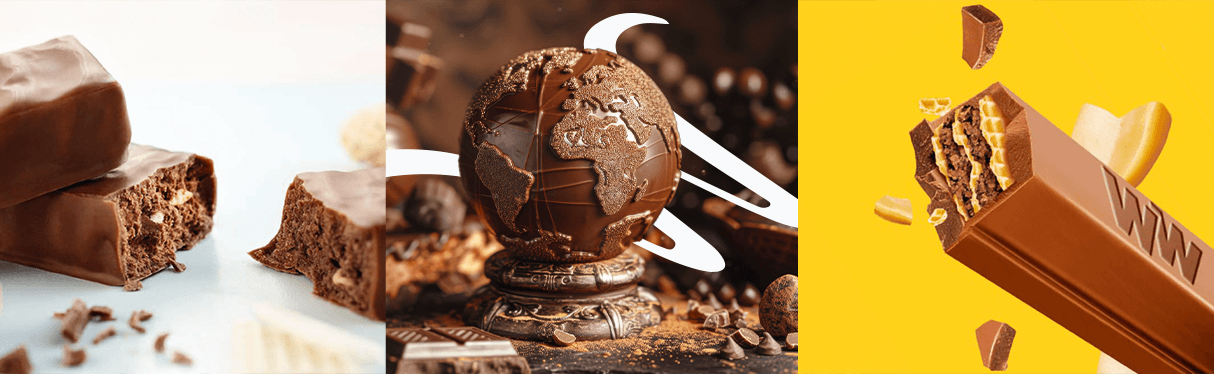
As the market looks ahead to 2026, chocolate bars are gaining renewed attention, particularly in bite sizes, countlines and compact formats suited to everyday moments. Consumers are increasingly choosing smaller portions with stronger flavors, richer textures and clearer emotional appeal.
Products, such as Choco Love and Choco Me, reflect this direction by reinterpreting classic bar formats for modern chocolate occasions.
 Ethics and transparency become non-negotiable
Younger generations are re-writing the rules. They want to know:
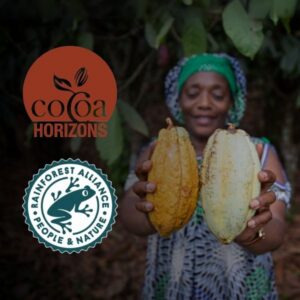
Where does the cocoa come from? Who grew it? How were they paid? What is the brand doing for the planet?
By 2026, sustainability will stop being a “bonus feature.” It will be an expectation, a baseline. Brands that do not offer transparency will lose trust quickly.
A shift in where people buy: the new chocolate journey
The store remains king, but with new dynamics
The supermarket and hypermarket remain the primary chocolate stage. But discounters like Aldi and Lidl are rewriting the rules, offering premium-like packaging at competitive prices.
Consumers still love the physical selection ritual: picking up a bar, turning it over, reading the cocoa percentage, debating flavours. But now they want promotions, seasonal theatre, and premium gifting displays.
E-commerce becomes emotional, not transactional
During the pandemic, online chocolate shopping exploded, and it hasn’t slowed down. What is interesting, however, is how people shop online now.
Consumers go online to:
- Discover niche, artisan or imported brands.
- Build customised gifting boxes.
- Order last minute presents through quick-commerce.
- Subscribe to monthly chocolate tasting boxes.
This is no longer a space for price comparison. It’s a space for discovery, curation and storytelling.
Travel retail and brand experiences rise again
Airports in 2026 tell a new chocolate story: luxurious displays, artisan assortments, regional specialties and high-end gifting sets.
Travelers want a memory, something they can bring home. At the same time, chocolate boutiques and cafés in big cities blend:
- Retail,
- Tasting,
- Hands-on workshops,
- Limited-edition drops.
These become experience hubs, nurturing the emotional connection to chocolate.
The world differs more than ever: regional chocolate stories
Europe: balancing budgets and quality
Europe’s love affair with chocolate runs deep, but the region faces two realities:
- High inflation makes people cautious.
- Strong premiumisation makes them selective.
Consumers buy fewer items, but better ones. They want craft, origin, sustainability and flavour sophistication.
North America: the playground of flavour
American and Canadian consumers embrace:
- Bold and unexpected combinations,
- Multi-texture formats,
- Functional chocolates,
- Protein-enhanced bars.
This is the region where “innovation” moves fastest and where brands test playful concepts before global rollout.
Asia-Pacific: the growth engine
Asia-Pacific is turning into the most dynamic chocolate region globally:
- Growing middle classes,
- Demand for premium gifts,
- High experimentation with flavours inspired by tea, fruits and traditional desserts,
- A strong e-commerce culture.
Seasonal gifting, from Lunar New Year to Singles’ Day, is exploding, placing chocolate beautifully within modern Asian gifting culture.
Latin America & Africa: from cocoa sources to chocolate creators
Once seen mainly as cocoa suppliers, these regions are now shaping their own chocolate futures.
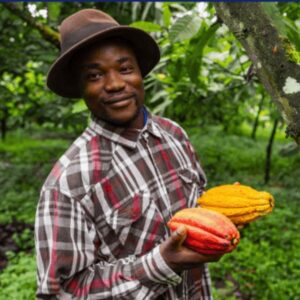
Ecuador is rising as a global cocoa powerhouse. African and Latin American brands are entering premium markets with strong origin stories and sustainable farming models. Many producers are launching:
- Bean-to-bar experiences,
- Direct-to-consumer sales,
- Tourist chocolate routes.
These regions are becoming both the past and the future of global cocoa.
What it all means for 2026 and beyond
 If we step back, a clear narrative emerges:
Chocolate in 2026 is still about pleasure, but a pleasure people want to understand, justify and personalise.
Brands that will win are those that:
- Offer premium experiences at accessible sizes;
- Communicate ethics clearly and honestly;
- Invest in sustainable cocoa and transparent sourcing;
- Embrace plant-based and functional innovations;
- Use digital channels for storytelling, not just sales;
- Create products that speak to real emotions and real moments;
In short:
the future belongs to chocolate that feels meaningful.
A new era of indulgence
As we move toward 2026, chocolate is no longer just a sweet treat.
It is:
- A tiny luxury in difficult times;
- A wellness-friendly reward;
- A cultural symbol;
- A travel souvenir;
- A gift that strengthens relationships;
- A flavour journey across continents.
And perhaps most importantly, it is a reminder that even in a world facing uncertainty, people will always seek out small moments of delight.
The chocolate market is changing, but the chocolate magic remains.