E.Wedel - certified to deliver. Licences, standards and compliance
In today’s fast-moving FMCG landscape, trust is not built solely on product quality. It is earned through consistency, transparency and the ability to collaborate with partners while maintaining the highest standards. E.Wedel exemplifies this approach by combining a strong heritage brand with a modern, structured licensing model that ensures quality across every touchpoint.
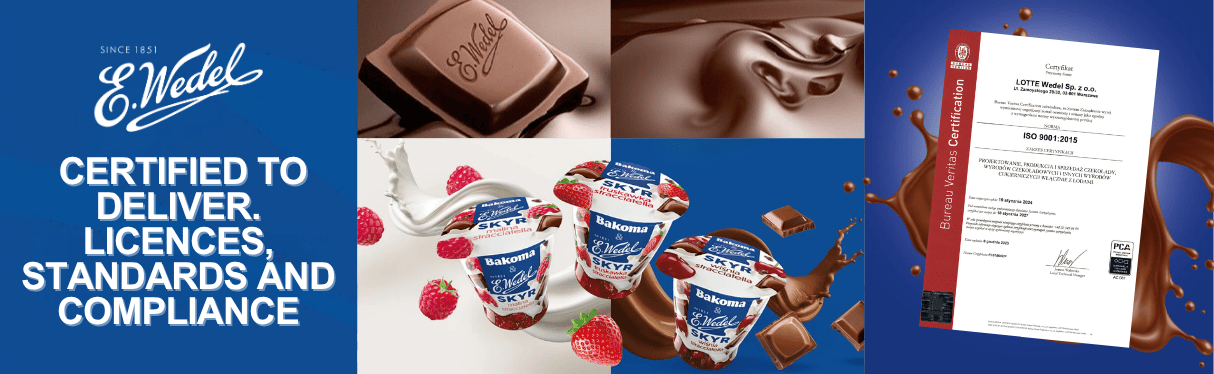
This article explores how E.Wedel leverages licensing partnerships, certifications and compliance with international standards to expand its brand responsibly, while strengthening trust among consumers, business partners and stakeholders.
Strategic licensing as a growth engine
Licensing is no longer just an add-on. It is a strategic pillar of brand expansion. For E.Wedel, cooperation with selected partners allows the brand to enter new product categories while preserving its identity and quality.
One of the most recognisable examples is the collaboration with Bakoma, which introduced yogurts enriched with E.Wedel chocolate. This partnership combines dairy expertise with premium chocolate, delivering a product that meets consumer expectations for both taste and quality.
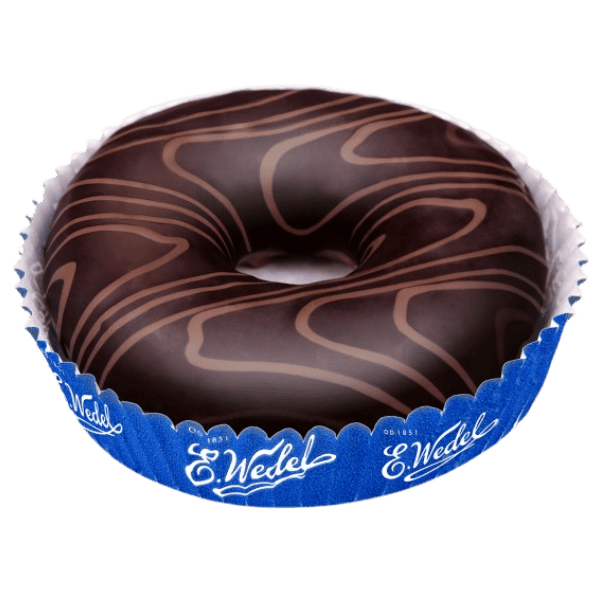
Similarly, cooperation with Stokson resulted in donuts filled or topped with E.Wedel chocolate. This extension into bakery products demonstrates how licensing can successfully translate brand equity into new consumption occasions.
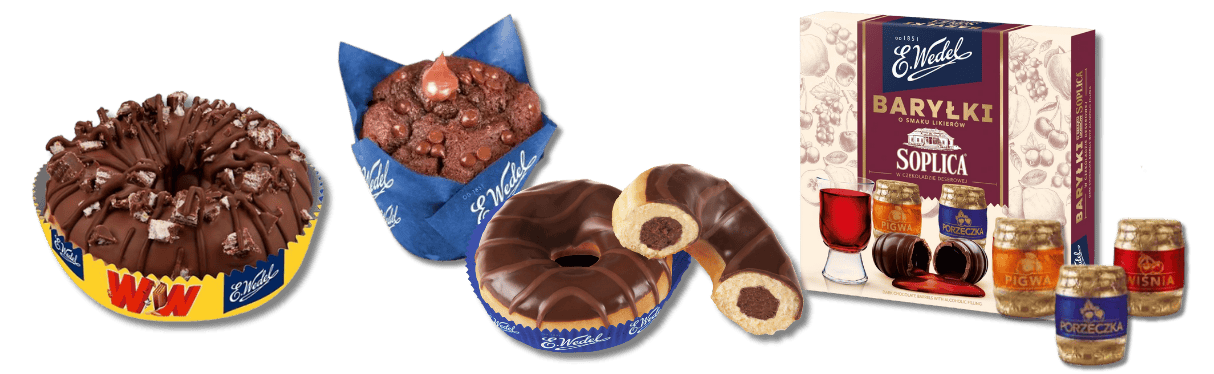
Another interesting case is the partnership with CEDC and the iconic Soplica. Together, both companies developed products such as Soplica liqueurs of chocolate or caramel flavour and “Baryłki” pralines with Soplica liqueur fillings. These products combine E.Wedel’s confectionery expertise with alcohol brands, creating a premium, adult-oriented offering.
Even in the fashion category, E.Wedel has demonstrated brand flexibility through collaboration with Gatta, introducing tights in chocolate-inspired shades. This unexpected yet cohesive extension reinforces the emotional and aesthetic dimension of the brand.
Each of these partnerships follows a carefully designed licensing model, where E.Wedel retains control over brand usage, product quality and communication standards.
Quality assurance through certifications
Licensing success depends on more than brand recognition. It requires rigorous quality control and compliance with internationally recognized standards.
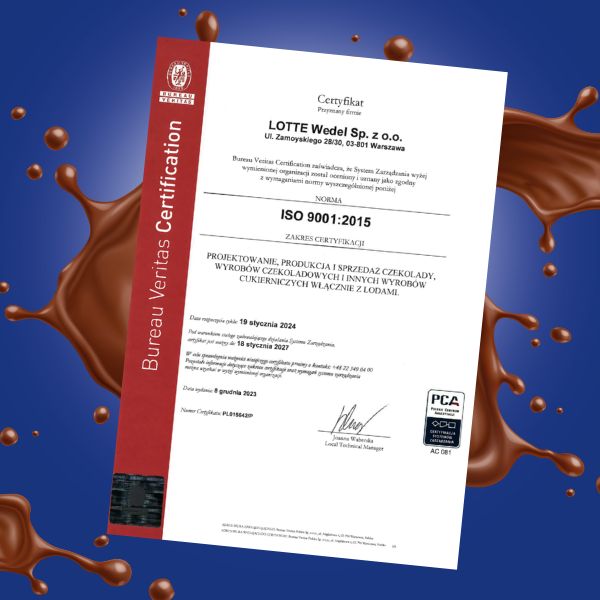 E.Wedel operates within a framework of certifications that ensure safety, consistency and accountability across its operations and partnerships. These include:
- Food safety management systems (such as ISO 22000 or equivalent frameworks)
- Quality management standards aligned with ISO principles
- Supplier audits and qualification processes
- Traceability systems ensuring full control over raw materials and production
These certifications are not just formal requirements. They are operational tools that enable E.Wedel to collaborate with partners across different industries while maintaining consistent product integrity.
For licensing partners, this means access to a proven system of quality assurance, reducing risk and ensuring that every co-branded product meets the same expectations as core Wedel offerings.
Compliance with international standards
As a brand with both local heritage and international ambitions, E.Wedel aligns its operations with global regulatory and compliance standards.
This includes:
- Adherence to European Union food safety regulations
- Compliance with labeling and consumer information requirements
- Alignment with ESG (Environmental, Social, Governance) principles
- Ethical sourcing practices, including responsible cocoa sourcing
By embedding compliance into its licensing model, E.Wedel ensures that every partner operates within a clearly defined framework. This not only protects the brand but also builds confidence among distributors, retailers and end consumers.
 Governance of licensing partnerships
A key element of E.Wedel’s success is the structured governance of its licensing agreements. Each collaboration is built on:
- Clearly defined brand usage guidelines
- Strict product development and approval processes
- Continuous quality monitoring and audits
- Alignment in marketing communication and positioning
This governance model ensures that all licensed products, whether yogurt, bakery, alcohol-based confectionery or even fashion items, remain consistent with the brand’s values and visual identity.
In practice, this means that every licensed product must pass multiple validation stages before reaching the market, from concept approval to final quality checks.
Building trust through consistency
Trust is built when consumers experience the same level of quality regardless of the product category. Whether they choose a chocolate bar, a yogurt, a donut or a praline with liqueur, they expect the same “E.Wedel standard.”
This consistency is achieved through:
- Strong internal quality systems
- Carefully selected partners
- Transparent licensing agreements
- Continuous oversight and improvement
For business partners, this translates into a reliable collaboration model. For consumers, it reinforces brand loyalty.

Ready for future growth
E.Wedel’s approach to licensing is not static. It is designed for scalability and future development. As consumer expectations evolve and new categories emerge, the brand is well-positioned to expand its licensing portfolio further.
Potential areas of growth include:
- New FMCG categories aligned with premium positioning
- International licensing partnerships
- Cross-industry collaborations combining food, lifestyle and experience
Importantly, every new opportunity will be evaluated through the same lens: quality, compliance and brand integrity.
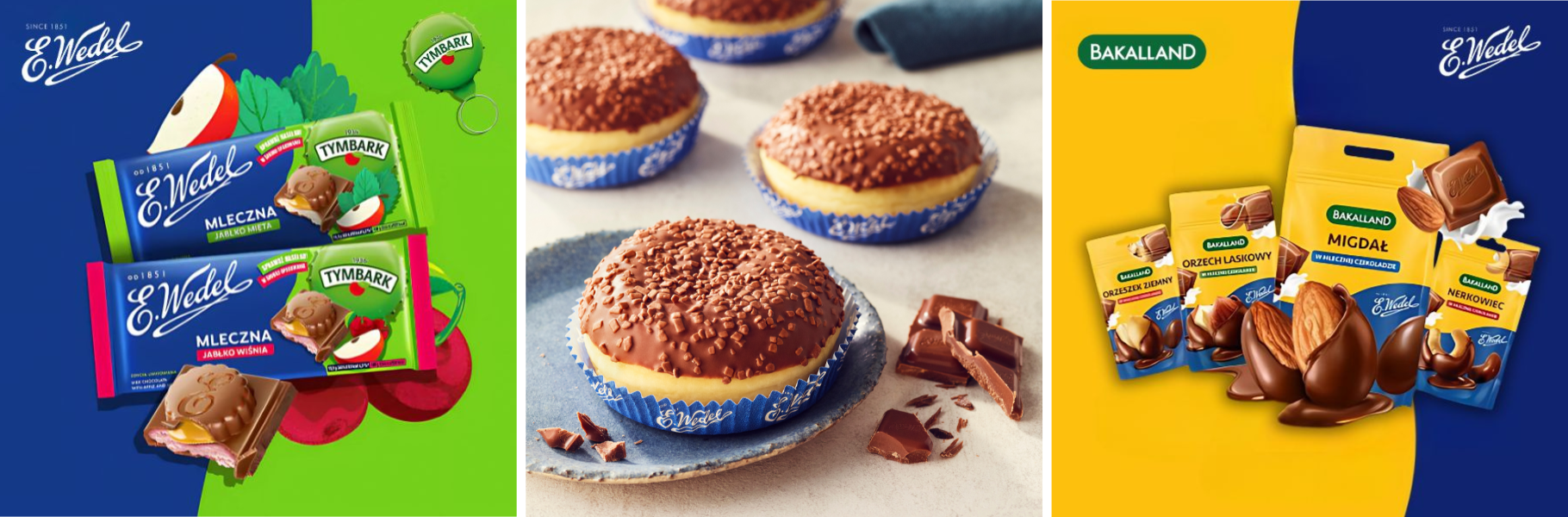
E.Wedel demonstrates that licensing can be a powerful tool for growth, provided it is built on a solid foundation of standards, certifications and trust.
Through partnerships with companies such as Bakoma, Stokson, CEDC/Soplica and Gatta, the brand has successfully expanded beyond traditional confectionery while maintaining its core identity.
By combining:
- rigorous certification systems,
- strict compliance with international standards,
- and a structured approach to licensing governance,
E.Wedel proves that brand extension does not have to come at the cost of quality.
On the contrary - it can strengthen it.
And in a market where trust is the ultimate currency, this is exactly what makes a brand truly certified to deliver.