The power of choice! E.Wedel’s diverse and scalable portfolio
For over 175 years, E.Wedel has been building one of the most recognisable confectionery brands in Central and Eastern Europe. What makes the company stand out today is not only its heritage and craftsmanship, but also the remarkable breadth and flexibility of its product portfolio. From iconic Ptasie Mleczko®, chocolate tablets and filled bars to pralines, seasonal collections, premium gifting solutions, and private label cooperation, E.Wedel demonstrates how a modern confectionery business can successfully combine tradition with market agility.
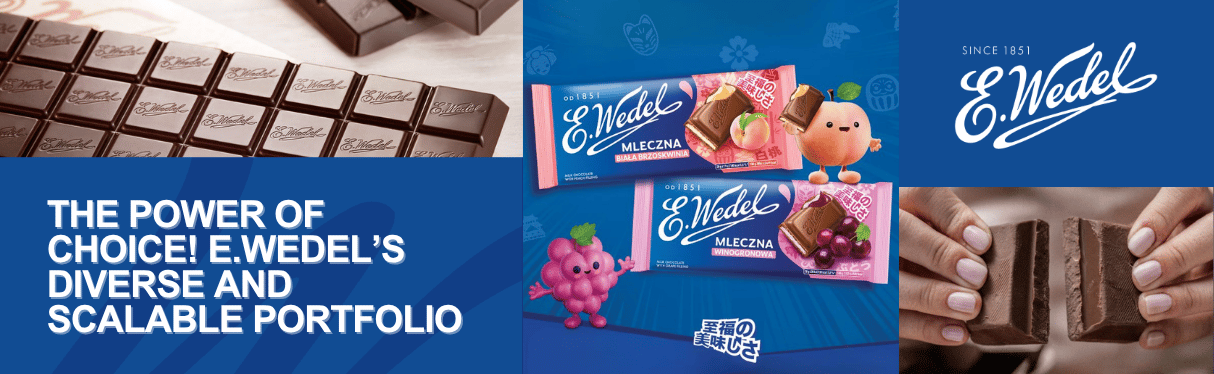
In an increasingly diversified retail environment, manufacturers must respond to multiple consumer expectations at once: affordability, premiumisation, innovation, convenience, gifting appeal, and export adaptability. E.Wedel’s portfolio strategy reflects exactly this multidimensional approach, allowing the company to operate effectively across various channels, customer groups, and international markets.
According to company materials, E.Wedel’s portfolio includes more than 200 products spanning chocolates, soft foams, pralines, bars, halva and sesame snacks. This wide assortment enables the brand to remain relevant across both everyday consumption occasions and premium gifting moments.
A portfolio designed for multiple consumer needs
One of the strongest advantages of E.Wedel lies in its ability to serve very different consumer expectations without compromising brand consistency. The company successfully combines classic bestselling products with trend-driven innovations and limited editions.
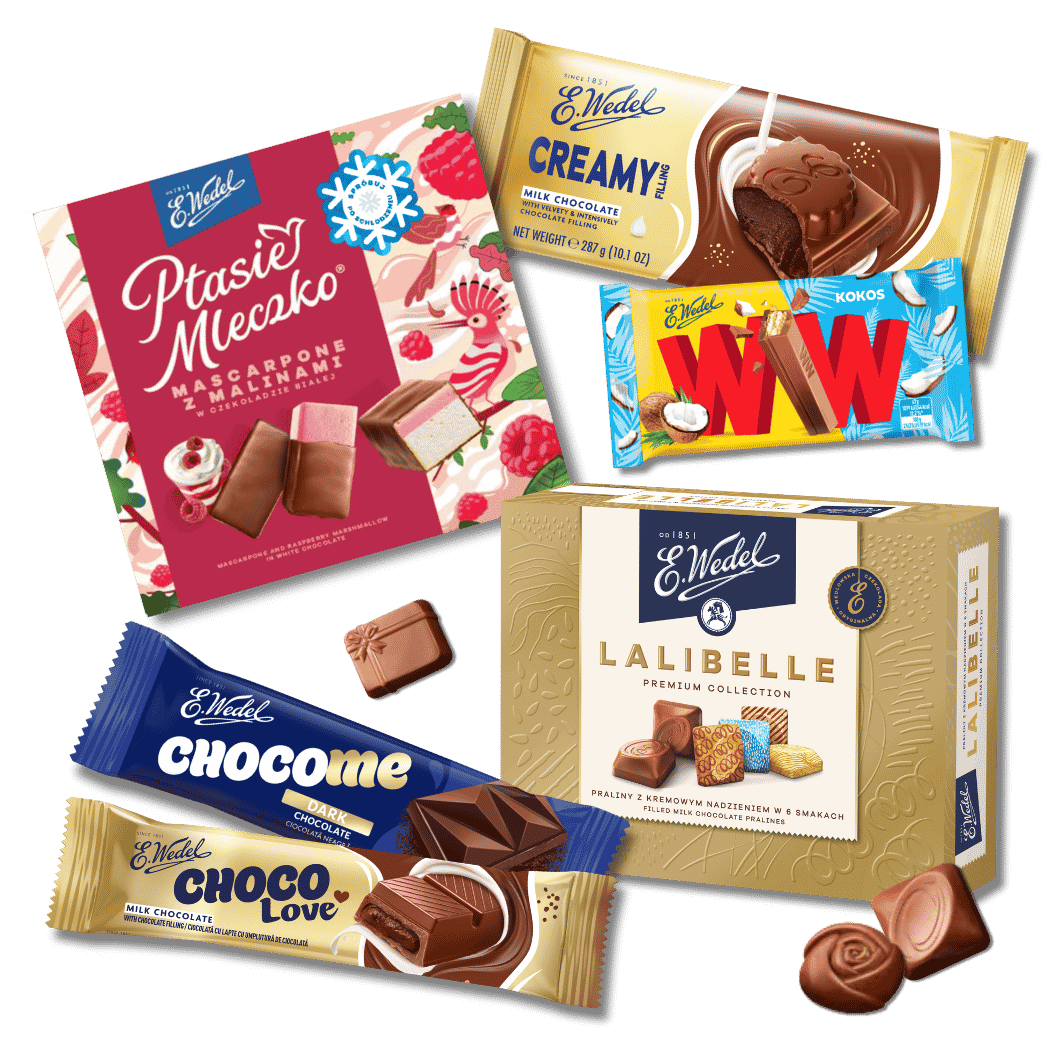 The portfolio includes:
- The iconic Ptasie Mleczko®
- chocolate tablets,
- filled chocolate bars,
- pralines and boxed chocolates,
- seasonal products,
- limited editions,
- premium gifting products,
- licensed collaborations,
- export-dedicated assortments,
- and private label production.
This structure gives E.Wedel the ability to adapt its offer to different retail environments, from traditional retail and modern trade to convenience stores, e-commerce, gifting channels, horeca, and export distributors.
The company’s classic chocolate tablet range includes milk, dark, and extra dark chocolate variants, as well as flavored fillings and inclusion-based recipes such as tiramisu, panna cotta, espresso, strawberry, coconut, crème brûlée, nuts, and cherry. This diversity allows the brand to appeal simultaneously to mainstream consumers seeking familiarity and to consumers looking for more sophisticated flavour experiences.
At the same time, E.Wedel continuously develops products aligned with evolving market trends. The company has expanded its dark chocolate assortment, including products containing 50%, 64%, and 80% cocoa sourced from Ghana. Such products respond directly to growing consumer interest in premium cocoa content, more refined flavor profiles, and perceived quality.
From everyday indulgence to premium experiences
Modern confectionery markets are increasingly polarised. On one side, consumers seek affordable everyday treats, on the other - they are willing to pay more for premium products offering emotional value, craftsmanship, gifting potential, or unique sensory experiences.
E.Wedel operates effectively in both spaces.
The company’s mass-market products, including bars such as Pawełek, WW, Bajeczny, and Pierrot, remain highly recognisable and accessible across multiple retail formats. These products support strong everyday consumption and impulse purchase potential.
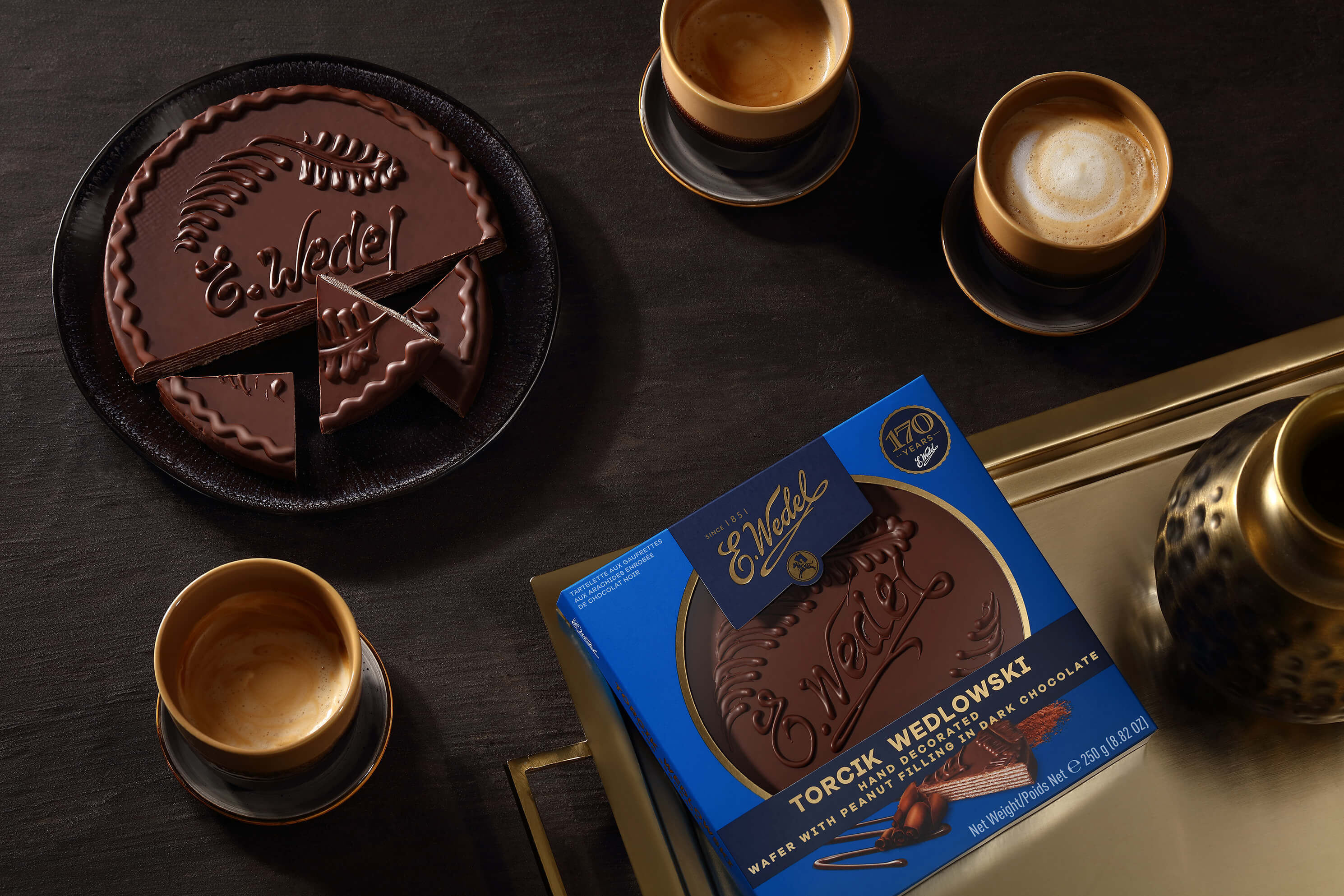
Simultaneously, the brand develops premium-positioned products such as pralines, sophisticated chocolate assortments, seasonal collections, and iconic handcrafted items like Torcik Wedlowski. The latter remains one of the strongest examples of how heritage craftsmanship can become a premium differentiator in modern retail.
Torcik Wedlowski continues to be hand-decorated, preserving a manufacturing tradition that distinguishes the product from fully industrialised confectionery. In today’s market environment, where authenticity and artisanal value are increasingly important, such manufacturing elements become strategic brand assets rather than operational limitations.
This balance between scalable production and selected handcrafted processes creates a portfolio architecture that is both commercially efficient and emotionally engaging.
Seasonal collections and limited editions as growth drivers
Seasonality plays a critical role in confectionery sales. Consumers actively search for emotionally driven, visually distinctive, and gift-oriented products during key moments such as Christmas, Easter, Valentine’s Day, and other celebratory occasions.
E.Wedel has developed strong capabilities in seasonal portfolio management, allowing the company to introduce products adapted to different sales peaks and regional preferences.
Seasonal editions help the brand:
- increase shelf visibility,
- stimulate impulse purchases,
- support gifting occasions,
- refresh the portfolio regularly,
- and create excitement around the brand.
Limited editions also allow E.Wedel to test new flavors, formats, packaging concepts, and partnership opportunities without permanently altering the core assortment.
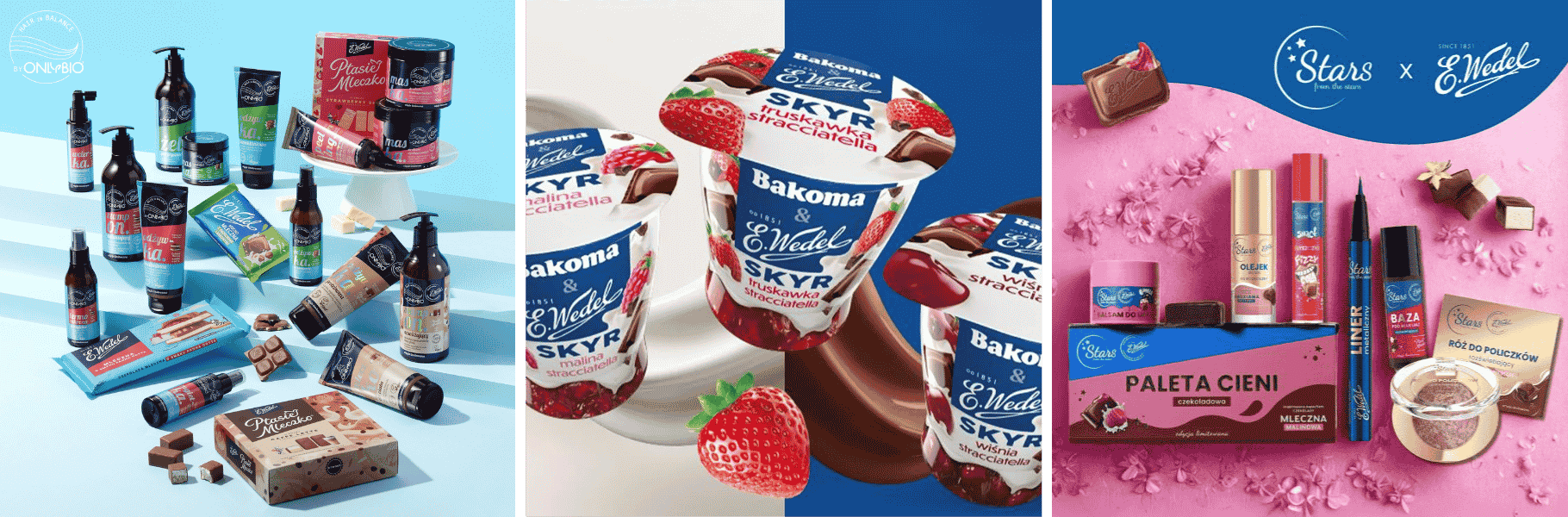
Examples of collaboration-based and limited-edition concepts include projects developed with Costa Coffee, OnlyBio, Bakoma, and other partners. These initiatives demonstrate the company’s openness to brand extensions and cross-category cooperation.
Such flexibility is especially important in today’s retail environment, where innovation cycles are becoming shorter and consumers increasingly expect novelty and experience-driven purchasing.
Portfolio flexibility across sales channels
Another important advantage of E.Wedel’s portfolio is its scalability across different retail and distribution channels.
Different channels require different product strategies:
- convenience stores prioritise impulse purchases and smaller formats,
- supermarkets focus on assortment breadth and seasonal rotations,
- premium retailers expect gifting-oriented products,
- horeca channels seek experiential consumption, like Ptasie Mleczko® shake’s,
- e-commerce values packaging durability and premium presentation,
- export markets often require localised adaptation.
E.Wedel’s broad assortment enables the company to operate effectively within all of these environments.
This flexibility is especially important for international cooperation, where distributors and retail partners often require customized portfolio mixes depending on consumer habits, market maturity, and price sensitivity.
Export readiness and international scalability
E.Wedel products are currently available in nearly 50 countries worldwide. The export footprint includes markets across Europe, North America, Asia, and the Middle East.
 The company’s export presence demonstrates several important operational strengths:
- scalable production capabilities,
- internationally adaptable product formats,
- stable quality standards,
- strong brand recognition among Polish diaspora consumers,
- and increasing appeal among international consumers seeking authentic European confectionery.
Export-ready portfolio requires more than strong products. They also demand:
- packaging flexibility,
- logistical efficiency,
- regulatory compliance,
- adaptable shelf-life management,
- and diversified product categories.
E.Wedel’s wide assortment supports this process by allowing partners to select portfolio combinations tailored to specific market conditions.
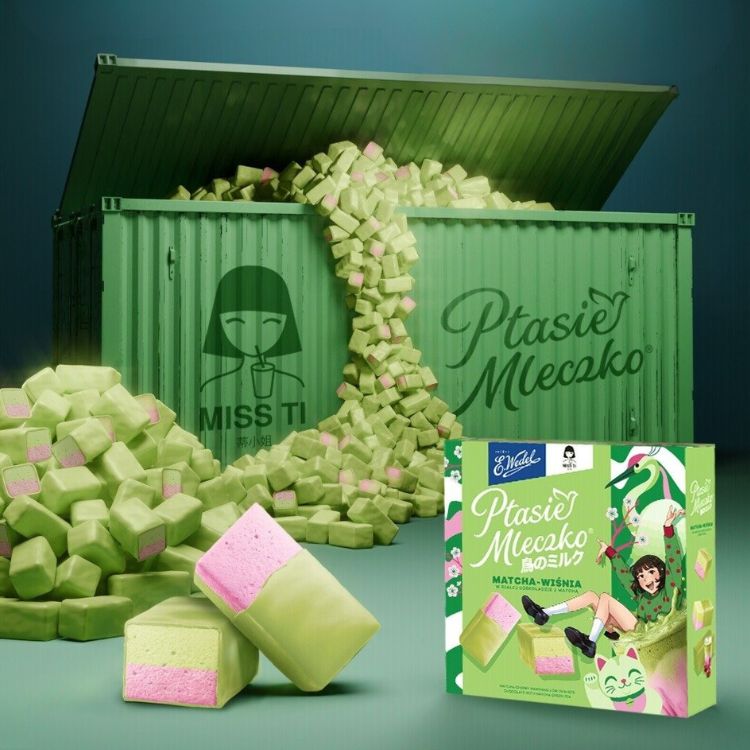
For some markets, iconic products such as Ptasie Mleczko® become hero SKUs building emotional brand recognition. In others, chocolate tablets or premium pralines may play a stronger role. The ability to adapt the assortment structure while maintaining brand consistency is one of the key competitive advantages of diversified confectionery portfolios.
Private label as a strategic partnership model
An increasingly important element of modern confectionery business development is private label cooperation. Retailers and distributors worldwide continue expanding their own-brand assortments, seeking experienced manufacturing partners capable of delivering quality, flexibility, and production reliability.
E.Wedel openly communicates that private label production is an important part of its business. According to the company, its more than 175 years of experience allow it to provide optimal solutions tailored to partner expectations.
Private label cooperation offers several strategic advantages:
- flexible production models,
- customised product development,
- scalable manufacturing,
- faster market entry,
- and the ability to address different price segments.
For retail partners, working with an experienced confectionery manufacturer significantly reduces operational risk while ensuring stable product quality and production know-how.
For E.Wedel, private label cooperation complements the branded portfolio strategy by:
- optimising production capacity,
- strengthening international partnerships,
- diversifying revenue streams,
- and expanding presence across multiple retail ecosystems.

Importantly, successful private label manufacturing requires not only technical capabilities, but also operational flexibility and product development expertise. Manufacturers must respond quickly to retailer expectations regarding:
- flavor profiles,
- packaging formats,
- product positioning,
- pricing structures,
- and market-specific regulations.
E.Wedel’s diversified manufacturing experience positions the company as a partner capable of supporting different cooperation models, from standard product adaptation to more customised portfolio solutions.
Innovation rooted in heritage
One of the most interesting aspects of E.Wedel’s portfolio strategy is the way the company combines historical heritage with modern innovation.
Many legacy confectionery brands struggle to remain relevant because they rely too heavily on nostalgia. E.Wedel takes a different approach. The company uses heritage as a credibility foundation while continuously evolving the portfolio through new flavors, collaborations, modern packaging, seasonal innovations, and export expansion.
This strategy creates a portfolio that feels both familiar and contemporary.
Consumers increasingly expect brands to offer emotional authenticity while also delivering novelty and relevance. E.Wedel’s ability to maintain iconic products while continuously introducing new concepts supports long-term brand vitality and market competitiveness.

Building long-term partnerships through portfolio diversity
In today’s confectionery market, portfolio diversity is no longer simply an advantage. It is a strategic necessity.
Retailers, distributors, and export partners increasingly seek manufacturers capable of supporting multiple business models simultaneously. They expect:
- product flexibility,
- innovation capability,
- scalable manufacturing,
- premium and mainstream segmentation,
- and operational reliability.
E.Wedel’s portfolio demonstrates exactly this kind of versatility.
From mass-market chocolate bars to premium gifting collections, from seasonal launches to private label cooperation, the company has created an ecosystem capable of responding to changing consumer behaviors and evolving retail realities.
This combination of heritage, scalability, innovation, and operational flexibility positions E.Wedel as a partner ready for long-term growth across domestic and international markets alike.
For modern retailers and distribution partners, the true power of choice lies not only in the number of products available, but in the ability of a manufacturer to adapt its portfolio strategically to different consumers, channels, and market expectations. E.Wedel’s diversified product portfolio shows how this strategy can become a long-term competitive advantage.